Two faces of Citra

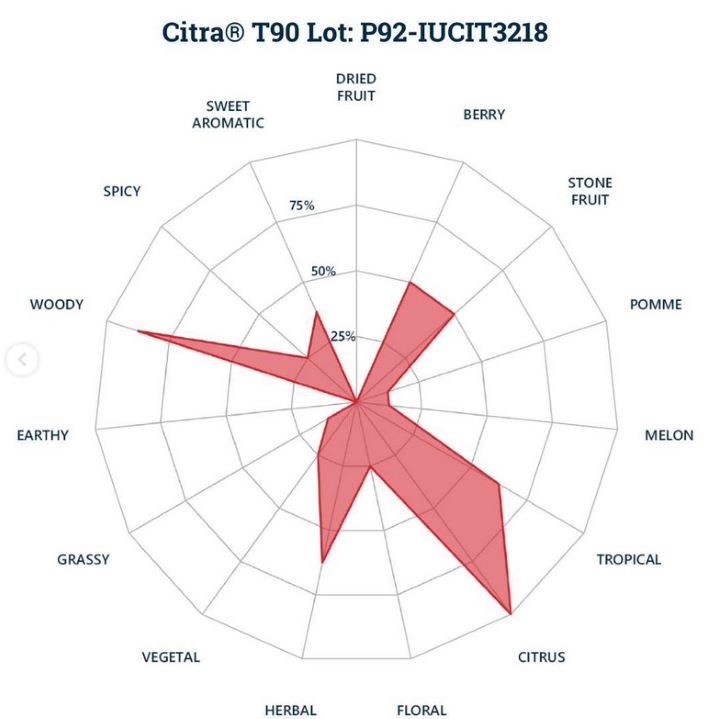
Citra spider chart

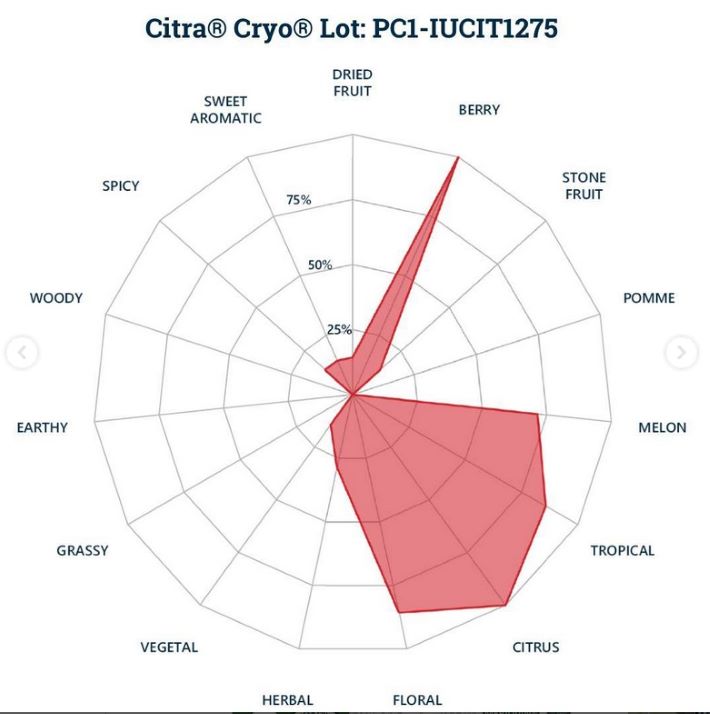
Citra spider chart

Earlier this week, Yakima Chief Hops posted information about a flash sale on Instagram, drawing attention to changes in the way customers may compare hop lots. The details:

“Review the brewing values, sensory characteristics including charts, and grower information anytime via our revamped Lot Lookup Tool. Just input the Lot Number into the tool. You even have the ability to compare HOT LOTS to each other. Enjoy the assurance of knowing exactly the aroma characteristics of your Spot order will be.”

You need to be a customer to use the tool. I am not. [A correction of sorts, and thanks to Max Coleman. Brewers who have a lot number may use the tool.] anybody can get a look at it here. The Instagram post included spider charts for a few lots, including the two posted above.

I originally thought to post this because for too many years I’ve received the occasional email asking, “What happened to [add your favorite hop name]. It is not the same as it used to be.” My catchall answer is that hops are an agricultural product. These charts are proof, but . . .

There is something else to consider. That’s a T90 pellet lot at the top, and a Cryo lot at the bottom. That the T90 lot is quite woody and the Cryo lot not at all woody suggests removing green matter (which happens when hops are cryogenically concentrated) eliminates the woody character found in “old fashioned” hops. Cool. Unless there’s something else in the green matter that might make the beer taste like some of us prefer.

This is not going to turn into a post about the pros and cons of concentrated hop products. Just something to think about. Scott Lafontaine, whose expertise I have leaned on multiple times, will be talking about “Deconstructing the Chemical Composition of a Hop Cone – a 21st Century Fractionation Approach” at the World Brewing Congress in August. Should be interesting.

A final note: These charts represent T90s and Cryo pellets before they are introduced during the brewing process. Biotransformations = change.
Queries 8.02: Taking a bite out of the hop surplus

* Strung, and not strung, for harvest
* Random observation: Hersbrucker Pure?
* The aromas of IPA
* Hop profile: Harlequin

Welcome to Vol. 8, No. 2. One quick programming note. Last month, I promised a report from harvest in New Zealand. That will have to wait until July.

EMPTY TRELLISES

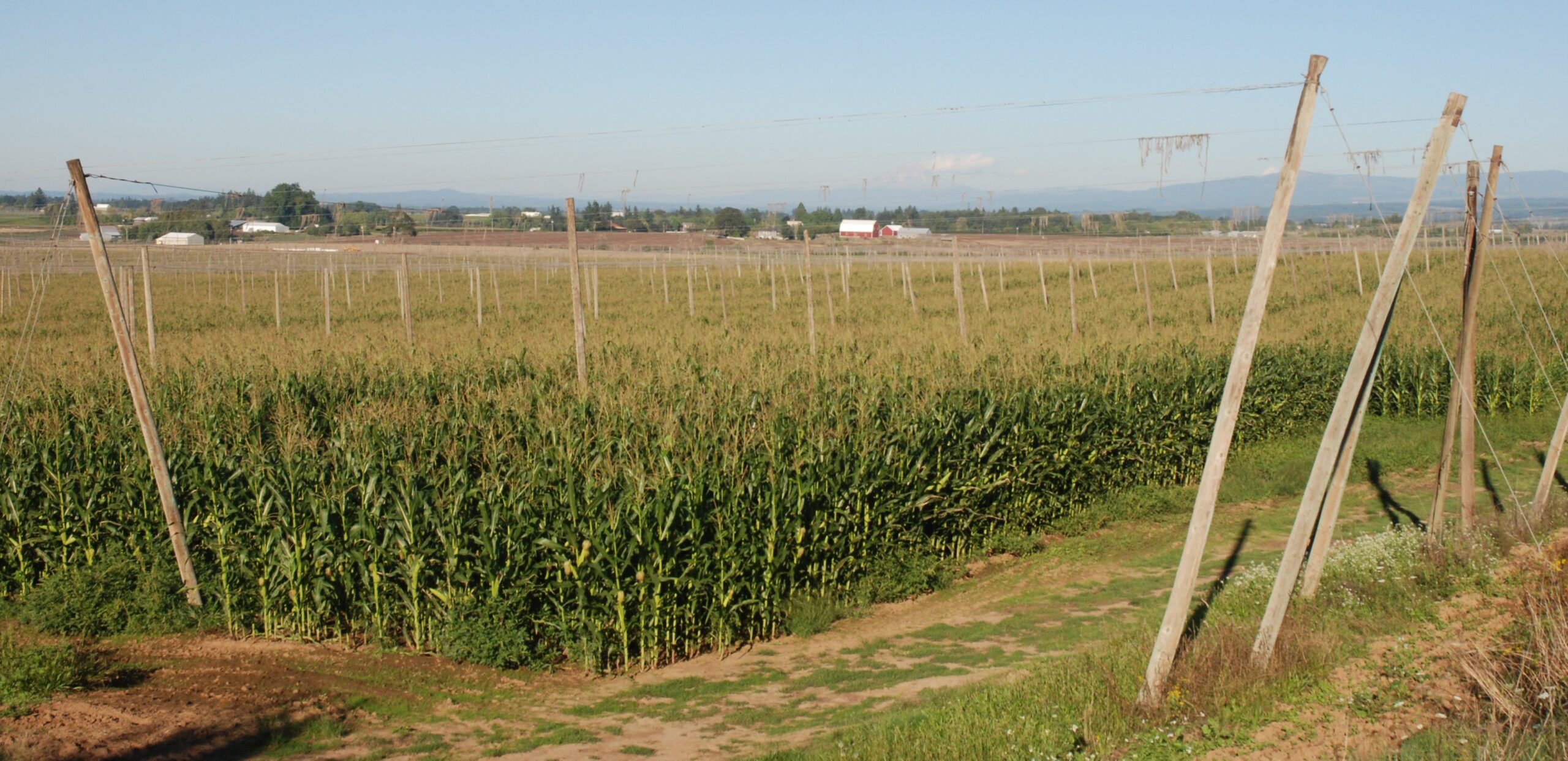
Yes, that is corn growing under trellises where there should be hops.

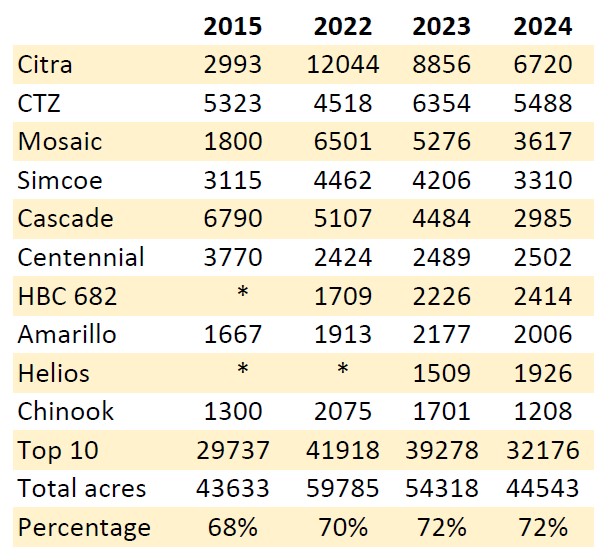
Farmers in the Northwest have strung 6,720 acres of trellises with Citra hops, to be harvested in September. That is about five times more acres than growers in England will harvest of all varieties this year.

However, US farmers didn’t string 2,136 acres with Citra that they did in 2023, or 5,324 that they did in 2022.

This is not an example of demand for Citra shifting to, say, UK-grown Harlequin (see below). This is an example of how out of whack aroma hop supply and demand are right now. A USDA report released Thursday indicates farmers will harvest 9,775 fewer acres in 2024 than they did in 2023, and 15,242 fewer than they did in in 2022.

(Some of those acres may simply remain empty, while crops may be grown on others. The photo above is not new. It was taken in Oregon in 2013, before aroma hops filled fields that were idled after a short-lived surge in alpha demand.)

I have already written a bit here, plus more at Brewing Industry Guide on why this is necessary. That has not changed in recent months.

The question now for hop producers and consumers is: What happens next?

I do not know. I will repeat that. I do not know. I will not pretend. Instead, a few numbers, offered in small bites. Some are more significant for brewers, some for farmers, some for beer drinkers.

American hop acreage chart

Read more

Why there may be more Saaz harvested in 2024 than Citra

Farmers in the American Northwest will reduce hop acreage by 20.5 percent, according to estimates global hop merchant Hopsteiner has shared. This isn’t exactly a surprise. In January, John I. Haas CEO Tom Davis said 10,000 acres of aroma hops needed to be eliminated.

That’s pretty much what seems to be happening. This estimate forecasts that overall 11,163 fewer acres will be harvested. It includes a significant reduction of CTZ, which is valued for its alpha, totaling about 1,627 acres. However, Hopsteiner is adding to Helios acreage and in this estimate acreage for HBC 682, another popular alpha hop, is grouped with “the rest.” As are popular aroma varieties such as Simcoe, El Dorado, Strata, and Idaho 7.

The USDA will issue its forecast in a few weeks, based on reports from growers in Washington, Idaho and Oregon. If it is close to this estimate of 43,155 acres, then farmers will harvest about the same number of acres as 2015, or 29 percent of peak acreage in 2021.

More takeaways after the chart. Acreage is listed in hectares. One hectare is equivalent to 2.47 acres.

Read more

Queries 8.01: Australian harvest, Cascade health and aroma, plus it turns out sometimes more really is more

* Resetting picking windows
* Region closeup: Australia
* Random observation
* Hop profile: Sterling
* Links
      -Underrated, overrated hops
      -German acreage
      -Crosby recipe book

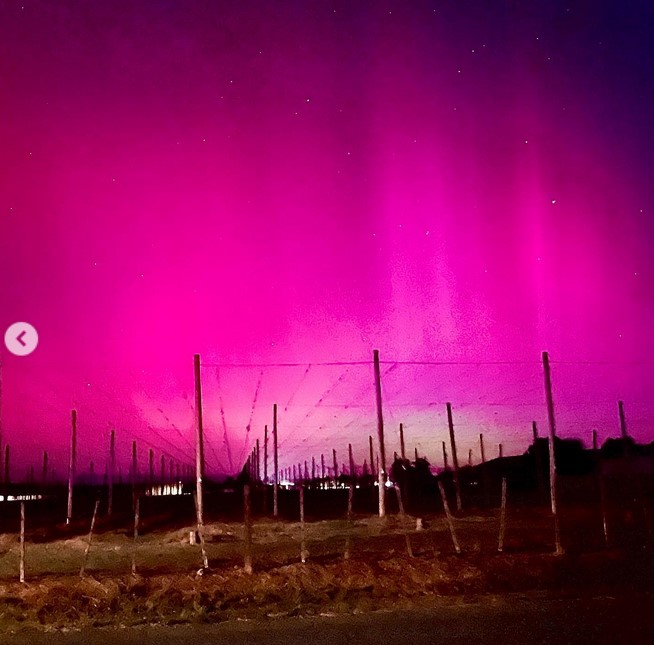
Southern Lights as seen from a Mac Hops hopyard.

Welcome to Vol. 8, No. 1. Could there have been a better place to watch the Northern and Southern Lights that filled the skies last week than a hop yard? Not everybody would say yes, but I think it would have been grand to have been magically transported to this field at Mac Hops in New Zealand. Check out the Instagram post from Brent McGlashen. At CBC, he told a great story about snow and Nelson Sauvin that I need to flesh out and relay next month. This month’s regional closeup focuses on Australia. Next month, New Zealand.

HOP HEALTH AND AROMA

During a presentation at the Craft Brewers Conference, CLS Farms added another chapter to what could make a good book, focusing on hop picking windows and decision making that may impact aroma and flavor.

The newest wrinkle is the role hop stunt viroid may play in deciding when to pick Cascade. Research suggests that if recently planted virus-free Cascade fields are harvested on “traditional” harvest dates they will be picked “before their time.”

CLS marketing and sales manager Claire Demarais nicely summarized the presentation, “Exploring Hop Picking Windows and Their Impact on Aroma and Flavor,” at the company blog. She sat on the panel along with Alexandra Nowell (also CLS), John I. Haas sensory manager Jeff Dailey, and Tom Nielsen of Abstrax Hops.

You may download the 2024 presentation here, along with one from 2023 (presentations at CBC and the Master Brewers Association of the Americas convention were the same). The 2024 presentation builds on 2023, with more data and the discussion about picking adjustments farms may need to make when replacing Cascade infected by hop stunt viroid (HSVd) with virus-free Cascade.

There is much to consider. For instance:

Read more

Queries 7.12: The way we look at hop families, & waiting for Tangier

* From a good family
* Hop profile: Nugget
* Links
      -Oregon I: Indie Hops
      -Oregon II: The sub-region
      -Orange hops
* Hunting for hops in Vegas

Welcome to Vol. 7, No. 12. This wraps up seven seasons for Hop Queries. So why not go to Las Vegas? I will be there soon (April 21-23) for the Craft Brewers Conference. The hop-related technical presentations are not as numerous nor always as in depth as at the World Brewing Congress (in Minnesota this year, in August), but I expect to learn plenty and will share the information in future Queries. There is no better place to check in with hop merchants from almost every significant hop growing region in the world.

I recognize that a relatively small number of subscribers will be in Las Vegas, so have made a list of a few essential stops the last section of the newsletter this month. The suggestions still may be of interest to those of you not attending, because the topics on the agenda reflect what is top of mind in hops at this moment.

THIS IS NOT A FAMILY TREE

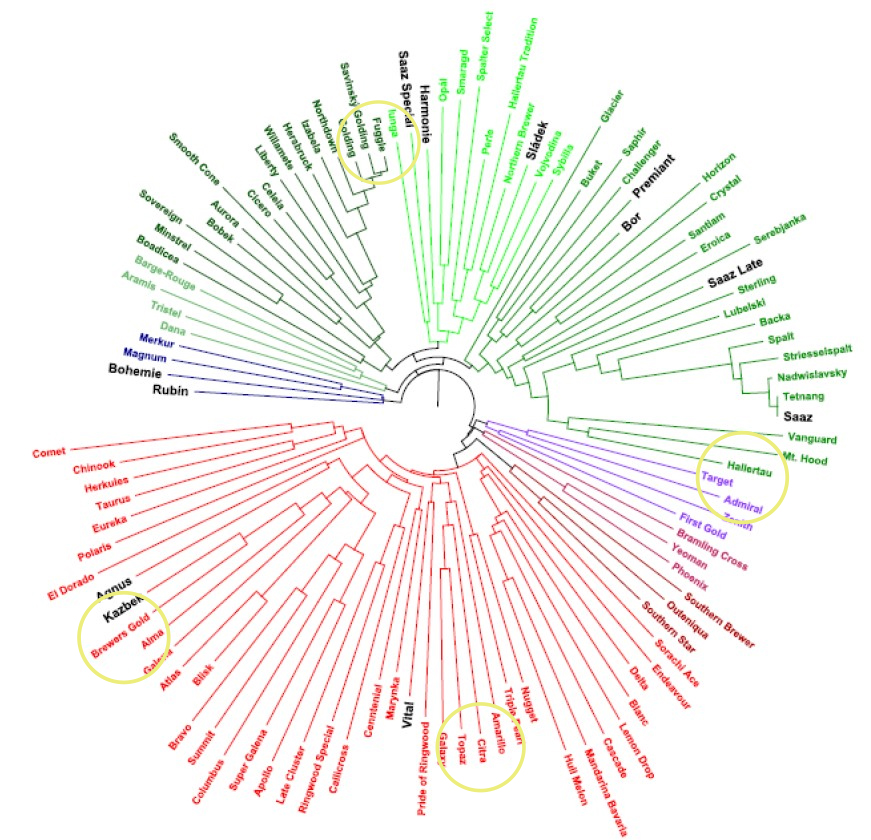
Dendogram representing genetic difference between hop varieties

This dendogram looks a little like the (out of date) family tree of yeast (scroll down to find the “tree”) unveiled in the mid-teens, but it does not connect mother and daughter (or grandparents and offspring) like a chart that illustrates how Citra became Citra. It represents the “genetic distances of 109 world hop collection cultivars based on 269 polymorphic molecular markers.”

Read more